
Guides
Cold Storage Wallet Principles
 Gregory Murphy11 min read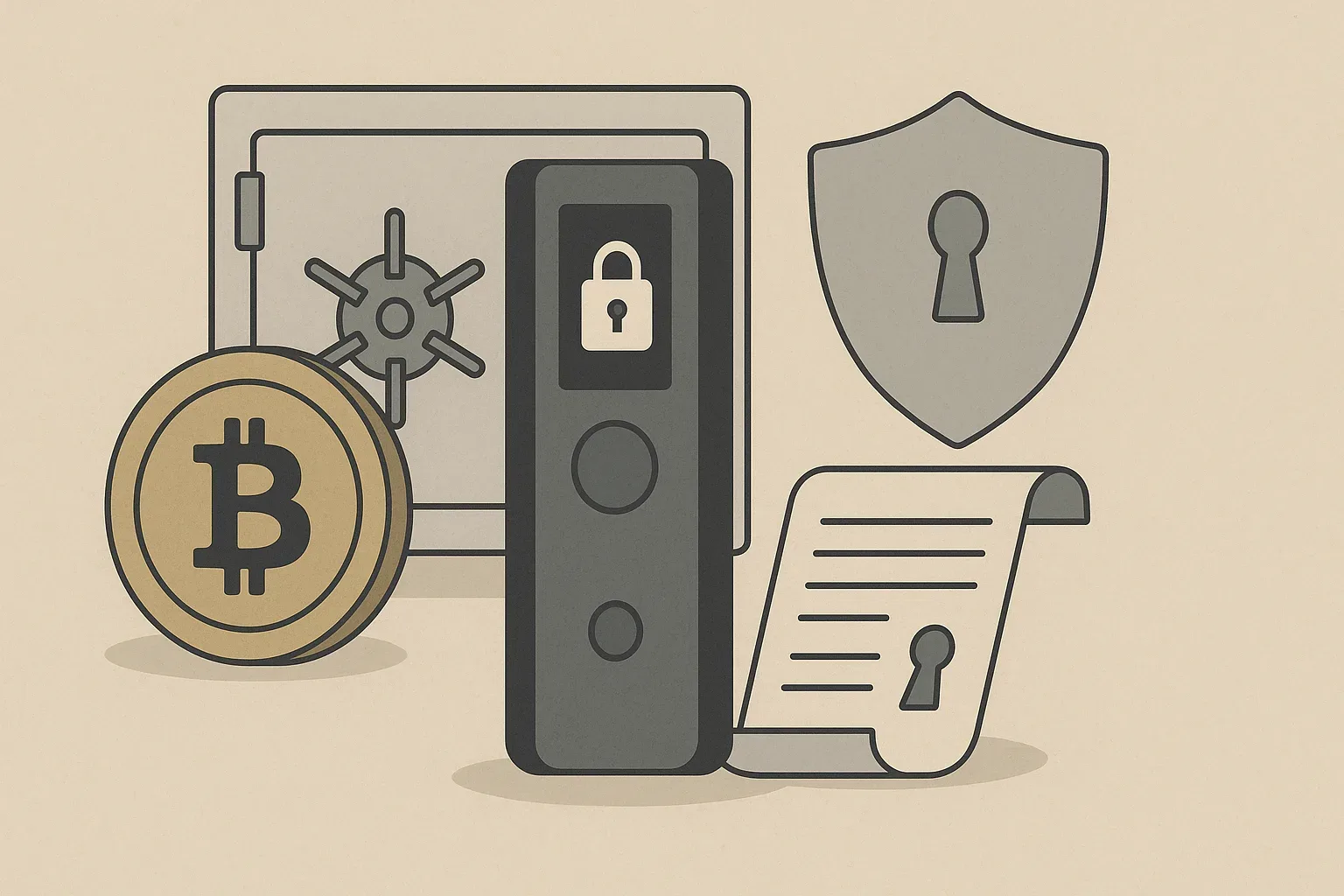
This guide goes beyond 'how-to' to deeply explore the fundamental security principles underpinning cold storage wallets, enabling users to understand why certain practices ensure crypto safety rather than just what to do. By dissecting these core principles, users can make informed decisions, mitigate risks, and build a resilient personal security posture for their digital wealth.
The Foundation: What Cold Storage Truly Means for Crypto Security
When private keys are never exposed to internet-connected devices, they are immune to remote hacking attempts, malware, phishing, and other forms of cyber attack that plague hot (online) wallets. The 'cold' in cold storage signifies this complete disconnection from any network, creating an air gap between your sensitive cryptographic material and the potential threats of the internet. This principle transcends specific device types; whether it's a hardware wallet, a paper wallet, or an air-gapped computer, the overarching goal is to remove the private key from the attack surface of the internet.
The Core Principle: Offline Private Key Isolation and Why It Matters
A private key is the cryptographic string that proves ownership of your cryptocurrency and authorizes transactions. If this key is compromised, your funds can be stolen instantly. By generating and storing private keys strictly offline, cold storage ensures that these keys never touch a system susceptible to online threats. It's about eliminating an entire class of attack. It creates an 'air gap' – a physical separation between the data and the network. It's a defense in depth, where the initial point of compromise (your internet-connected device) is rendered irrelevant to the safety of your private key.
Deep Dive: Principles of Hardware Wallet Security and Design
Firstly, secure element integration: many hardware wallets embed a dedicated cryptographic secure element (similar to those found in passports or credit cards) that is tamper-resistant and specifically designed to protect private keys. This element generates and stores keys, preventing their extraction even if the device itself is physically attacked. Secondly, firmware integrity: the device runs minimalist, auditable firmware designed to perform only specific cryptographic operations, reducing the attack surface significantly compared to a general-purpose computer. Thirdly, physical tamper detection: many devices include mechanisms to detect and alert users if the device has been physically tampered with, for instance, during shipping. Fourthly, screen verification: all critical transaction details (recipient address, amount) are displayed on the device's trusted screen, requiring physical confirmation from the user. This prevents sophisticated malware on a connected computer from subtly altering transaction details without the user's knowledge. Finally, PIN protection and automatic wipes: multiple incorrect PIN attempts typically result in the device wiping itself, rendering the private keys inaccessible to unauthorized users but recoverable by the legitimate owner using their seed phrase.
Beyond Hardware: Principles of Paper Wallets and Other Cold Storage Methods
Secure generation involves using an offline computer, booting from a clean operating system (like Linux Live CD), and then printing directly to an offline printer. Air-gapped computers are another method, involving a dedicated computer that has never been and will never be connected to the internet. This machine can be used to generate keys, sign transactions, and manage wallets, with data transferred via USB (carefully scanned for malware).
The Unbreakable Link: Principles of Seed Phrase Management and Secure Recovery
The seed phrase, also known as a recovery phrase or mnemonic, is the master key to your cryptocurrency. It's typically a sequence of 12, 18, or 24 words that can regenerate all your private keys and addresses. Anyone who possesses your seed phrase can access your funds. Therefore, it must be generated offline (usually by the cold storage device itself), written down physically, and stored securely offline, away from your digital devices and away from the cold storage device itself. Losing it means losing access to your funds, regardless of the security of your hardware wallet.
Executing Transactions: Principles of Air-Gapping and Offline Signing
The private key, stored securely offline, never touches the internet. This online device prepares the transaction details: recipient address, amount, and network fees. This unsigned transaction data is then transferred to the cold storage device. The cold storage device receives the unsigned transaction, verifies the details on its trusted display, and then uses its internally stored private key to cryptographically sign the transaction. This signature proves ownership without ever exposing the private key itself. The now signed transaction data is then transferred back to the internet-connected device, which broadcasts it to the blockchain network. The online component only handles unsigned transaction preparation and signed transaction broadcast, never directly interacting with the private key.
Advanced Principles: Understanding Multi-Signature and Shamir Backups
As cold storage needs grow more sophisticated, advanced principles like multi-signature (multisig) and Shamir's Secret Sharing (SSS) offer enhanced security layers. Multisig requires multiple private key holders to approve a transaction before it can be executed. For example, a 2-of-3 multisig wallet needs any two out of three designated private keys to sign a transaction. This principle distributes trust and eliminates single points of failure. If one key is compromised or lost, the funds remain secure because additional keys are required. It's particularly valuable for organizational treasuries, joint accounts, or individuals seeking extreme resilience against theft or personal loss. Shamir's Secret Sharing, on the other hand, is a cryptographic algorithm that splits a single secret (like a seed phrase) into multiple unique parts, or "shares." A predefined number of these shares (e.g., 3 out of 5) are required to reconstruct the original secret. This differs from simple splitting, where each part might reveal some information. SSS ensures that individual shares reveal no information about the secret until the threshold number is combined. This enhances security by distributing the risk of loss or compromise across several geographically separate shares, making it much harder for an attacker to reconstruct the full secret, and more resilient to losing one or two shares compared to a traditional seed phrase.
Common Breaches: Principles to Avoid When Using Cold Storage
Despite the inherent security of cold storage, common errors can nullify its benefits. Principle violations include: digital storage of seed phrases – saving a photo, text file, or cloud backup of your seed phrase instantly compromises the offline principle, making it vulnerable to online attacks; unverified hardware wallets – purchasing from unofficial resellers or accepting tampered devices (e.g., pre-initialized with a seed phrase) undermines the hardware wallet's integrity; ignoring on-device verification – failing to meticulously verify transaction details on the hardware wallet's screen before confirming can lead to 'man-in-the-middle' attacks where malware alters the recipient address; poor physical security of recovery phrases – storing the seed phrase in an easily discoverable or non-resilient location (e.g., plain paper in a desk drawer) makes it vulnerable to physical theft or damage; using compromised computers for transaction initiation – while the private key remains offline, a highly compromised online computer could theoretically trick you into signing an incorrect transaction or reveal other sensitive information; sharing your PIN or seed phrase – these should never be shared with anyone, including 'support' personnel, as no legitimate entity will ever ask for them. Adhering to the principles of offline isolation, rigorous verification, and physical security is key to avoiding these breaches.
Sustaining Security: Ongoing Principles for Cold Storage Best Practices
Maintaining robust cold storage security is an ongoing process, not a one-time setup. Several principles guide long term best practices. Firstly, regular verification and education: continuously educate yourself on new threats and best practices. Periodically verify the integrity of your cold storage devices and the physical security of your seed phrase backups. Secondly, separation of concerns: avoid storing all your crypto assets in a single wallet, even a cold one. Diversification across multiple cold storage solutions (e.g., different hardware wallet brands, multisig setups) adds a layer of resilience. Thirdly, firmware and software updates (carefully): regularly update your hardware wallet firmware and associated companion software, but always do so from official sources and verify integrity. Ensure updates are done in a secure environment. Fourthly, test recovery procedure: periodically (e.g., once a year) practice recovering a small amount of crypto using your seed phrase on a separate, secure device. This confirms your recovery phrase is correctly recorded and understood, and that you know the process without risking your primary holdings. Fifthly, opsec hygiene: maintain strong operational security, including using strong, unique passwords for all related accounts, enabling two-factor authentication, and being wary of phishing attempts. Finally, inheritance planning: consider how your assets will be accessed and managed in the event of your incapacitation or death, incorporating secure, pre-planned access for trusted individuals while maintaining security against unauthorized access.
What are the fundamental security principles that define cold storage?
The fundamental security principles that define cold storage are primarily offline private key isolation, air-gapping, and minimizing attack surfaces. Offline private key isolation means the cryptographic keys used to control cryptocurrency funds are generated, stored, and used entirely separate from any internet-connected system. Air-gapping refers to the physical separation from online networks, ensuring no direct electronic communication can occur. Minimizing attack surfaces involves using simple, dedicated devices (like hardware wallets) with limited functionality to reduce potential vulnerabilities compared to general-purpose computers.
How do hardware wallets and other cold storage methods implement these principles?
Hardware wallets implement these principles by storing private keys within a secure element, generating keys on-device, and requiring physical confirmation for transactions on a trusted screen, all while remaining offline during the signing process. Paper wallets implement these principles through pure physical representation: private keys are printed on paper and kept entirely disconnected from any digital medium. Air-gapped computers achieve this by being dedicated machines that are never connected to the internet, used solely for cryptographic operations, with data transferred via physically separated media like USB drives (after careful verification). Each method varies in its execution but strictly adheres to the core tenet of keeping the private key isolated from online threats.
What principles govern the secure generation, storage, and recovery of a seed phrase?
Secure generation, storage, and recovery of a seed phrase are governed by principles of offline generation, non-digital recording, physical resilience, and geographical distribution. Seed phrases must be generated by a truly random source on an offline device to prevent compromise during creation. They should never be digitally recorded or stored on any internet-connected device or cloud service. Physical resilience means writing them down on durable materials resistant to fire, water, and degradation. Geographical distribution, or splitting and storing parts of the phrase in separate secure locations, mitigates the risk of a single point of failure and enhances overall security against both loss and theft.
What are the core principles behind securely transacting from a cold storage device?
The core principles behind securely transacting from a cold storage device are offline signing, trusted display verification, and air-gapped communication. Offline signing ensures that the private key never leaves the secure, disconnected environment of the cold storage device. The transaction is prepared on an online device but signed only by the offline device. Trusted display verification mandates that all critical transaction details (recipient address, amount) are visually confirmed by the user on the cold storage device's own secure screen, preventing malware from altering transaction parameters unnoticed. Air-gapped communication refers to the controlled, secure transfer of unsigned and then signed transaction data between the online and offline components, typically via USB or QR codes, without directly exposing the private key to the internet.
How do advanced techniques like multi-signature and Shamir's Secret Sharing enhance cold storage principles?
Advanced techniques like multi-signature (multisig) and Shamir's Secret Sharing (SSS) enhance cold storage principles by adding layers of distributed trust, redundancy, and resilience against single points of failure. Multisig requires multiple independent private keys to authorize a transaction, meaning no single individual or compromised key can unilaterally access funds. This distributes control and adds security for shared or organizational funds. Shamir's Secret Sharing splits a master secret (like a seed phrase) into multiple shares, requiring a predefined subset of these shares to reconstruct the original. This provides redundancy by allowing for the loss of some shares without losing the entire secret, and significantly enhances security by preventing any individual share from revealing information about the secret, making it far harder for an attacker to compromise the entire backup.
What common errors violate cold storage principles, and how can they be avoided?
Common errors that violate cold storage principles typically involve compromising the offline nature of the private key or its recovery phrase. These include storing seed phrases digitally (e.g., photos, cloud backups, text files), which makes them vulnerable to online attacks; using unverified or tampered hardware wallets acquired from unofficial sources; failing to verify transaction details on the hardware wallet's screen, opening the door to 'man-in-the-middle' attacks; and poor physical security of recovery phrases (e.g., leaving them unprotected or in easily discoverable places). These errors can be avoided by strictly adhering to offline storage for private keys and seed phrases, always purchasing hardware from official channels, meticulously verifying all on-device transaction details, employing durable and geographically distributed physical storage for backups, and never sharing your seed phrase or PIN with anyone.