
Guides
Mpc Wallet Technology
 Gregory Murphy13 min read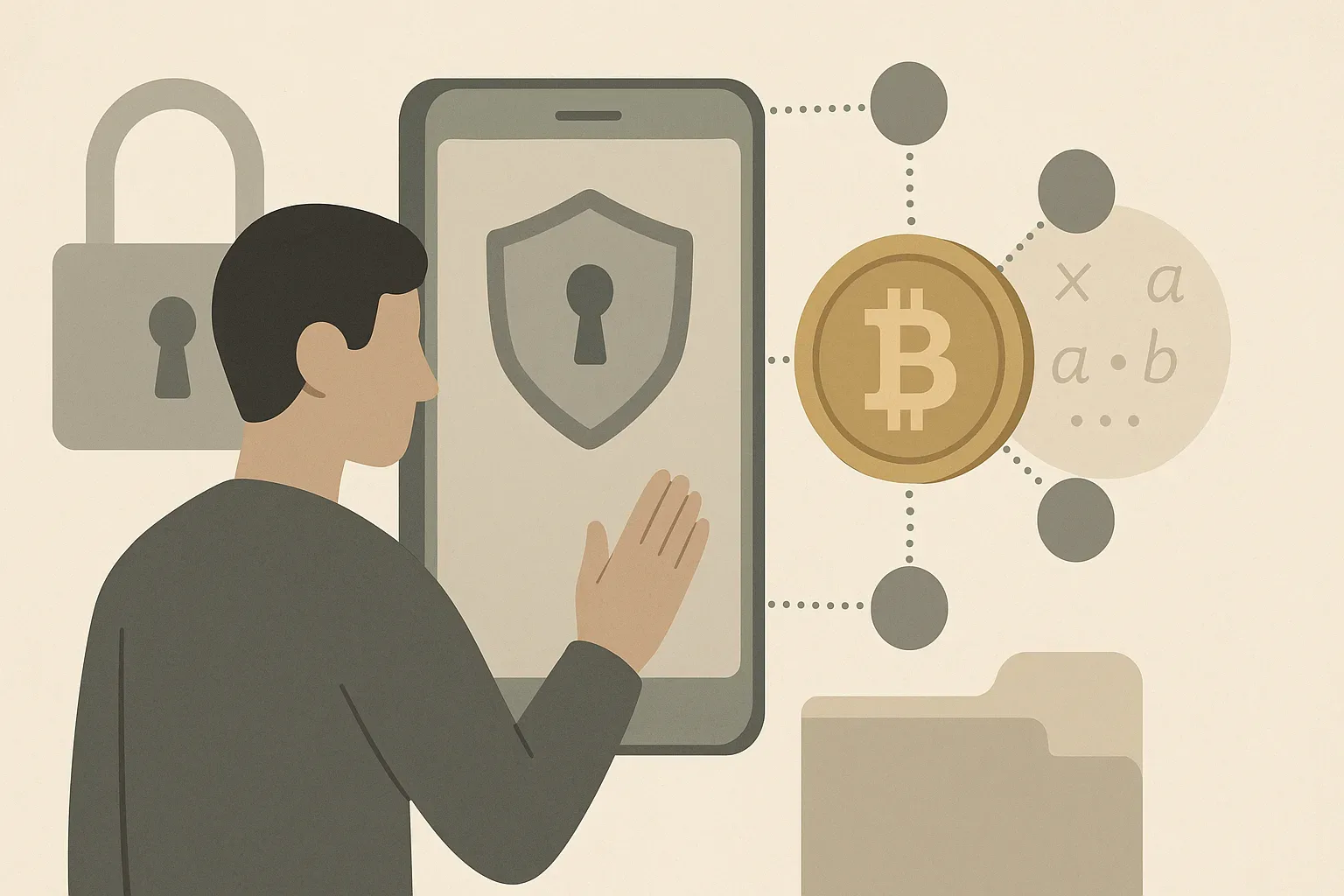
MPC (Multi-Party Computation) wallet technology represents a paradigm shift in how private keys are managed and secured for cryptocurrency assets. Moving beyond traditional single-point-of-failure models, MPC leverages advanced cryptographic techniques to distribute trust and control across multiple independent parties. This guide will demystify MPC, explaining its cryptographic foundations as a superior method for distributed private key management that eliminates single points of failure, significantly enhancing crypto asset security for both individuals and institutions. By dissecting its operational mechanics, contrasting it with existing solutions like multi-signature, and exploring its practical applications, readers will gain a comprehensive understanding of why MPC is becoming the cornerstone of next-generation crypto security.
What is MPC Wallet Technology? Breaking Down the Cryptography
Multi-Party Computation (MPC) wallet technology is a cryptographic primitive that enables multiple parties to jointly compute a function over their private inputs without ever revealing those inputs to each other. In the context of cryptocurrency wallets, this means the private key is never generated or stored in its complete form in any single location or by any single entity. Instead, the key is mathematically split into multiple "shares" or "shards" during a distributed key generation (DKG) process. Each share is held by a different, independent party. When a transaction needs to be signed, these parties interact to collectively produce a valid signature without any single party ever needing to reconstruct or see the entire private key. This fundamental principle eliminates the singular vulnerability associated with a monolithic private key, offering a robust defense against compromise, whether from sophisticated hacks, insider threats, or simple human error. The underlying cryptography ensures that even if one or more shares are compromised, the entire private key remains secure, provided the threshold of shares needed for signing is not met.
How Multi-Party Computation Works: Distributing Trust and Control
The operational mechanics of Multi-Party Computation in a wallet context involve several critical steps that distribute both trust and control. The process begins with a distributed key generation (DKG) ceremony. Instead of a single device generating a private key, multiple participants (which could be the user's devices, cloud servers, or a combination) collectively generate unique shares of a private key. Crucially, at no point during this process is the full private key ever assembled or known by any single participant. Each participant retains their secret share. When a transaction requires signing, the involved parties perform a secure multi-party computation protocol. Each party uses its respective share to contribute to a partial signature. These partial signatures are then combined through further computation to produce a valid, full cryptographic signature for the blockchain transaction. Again, the complete private key is never reconstructed or exposed; the computation happens on the encrypted, distributed shares. This architectural design ensures that control is inherently distributed, requiring a predefined threshold of parties (e.g., 2 out of 3, 3 out of 5) to cooperate for any action, thus eliminating any single point of control or failure and significantly enhancing overall security.
Key Security Advantages of MPC Wallets Over Traditional Methods
MPC wallets offer significant security enhancements over traditional cryptocurrency storage methods. The primary advantage is the elimination of a single point of failure. Unlike hot wallets where the private key resides entirely on an internet-connected device, or even cold wallets where a single physical device holds the master key, MPC distributes the key material. This means that compromising one device or one share does not compromise the entire fund. It dramatically reduces the risk of loss from malware, phishing attacks, or physical theft of a device, as an attacker would need to compromise multiple independent parties simultaneously to gain control. This distributed approach also offers superior recovery mechanisms, where a lost or compromised share can often be recreated from the remaining shares without exposing the master key. This contrasts sharply with the perilous task of securing a single seed phrase or hardware wallet, as explored in the nuances of `https://latestcoinnews.com/how-to-read-a-crypto-wallet-security-model`, where the entire security model hinges on one master secret. The inherent resilience and distributed nature of MPC provide a more robust and adaptable security framework.
MPC vs. Multi-Sig: Understanding the Key Differences and Strengths
While both Multi-Party Computation (MPC) and multi-signature (multi-sig) wallets aim to distribute control over crypto assets, they achieve this through fundamentally different cryptographic mechanisms and operational layers. Multi-sig is an on-chain solution: it is a feature of the blockchain protocol itself, where a transaction requires multiple distinct digital signatures from pre-specified public keys to be considered valid. This means the multi-sig script is visible on the blockchain, and each signer uses their own independent private key to sign. The primary strength of multi-sig lies in its transparency and auditability, as the approval process is explicitly recorded on the ledger. However, multi-sig solutions are often blockchain-specific, incur higher transaction fees due to increased data payload, and require all signers to have their own complete private keys. MPC, conversely, is an off-chain cryptographic primitive that occurs before a transaction is ever sent to the blockchain. With MPC, the private key itself is split into shares, and these shares are used in a collaborative computation to produce a single, standard signature that appears on the blockchain like any other single-key signature. This means MPC is blockchain-agnostic, typically results in lower transaction fees (as it looks like a single signature), offers greater privacy (as the multi-party approval process is not visible on-chain), and provides greater flexibility in defining sophisticated policy rules. While multi-sig remains a viable and transparent option for many use cases, as further detailed in `https://latestcoinnews.com/multi-signature-wallet-functionality`, MPC offers a more advanced and versatile approach to distributed key management, especially for scenarios requiring enhanced privacy and chain interoperability.
Practical Applications and Use Cases for MPC Wallets
The capabilities of Multi-Party Computation wallets extend across a wide spectrum of users, from individual investors to large-scale institutional entities. For individual users, MPC offers enhanced protection against common threats like device loss or malware. Instead of a single seed phrase that, if compromised, leads to total loss, MPC distributes the risk, often allowing for recovery or continued access even if one component is lost. This makes it particularly attractive for high-net-worth individuals seeking a superior level of personal asset security and robust recovery options. For institutions, MPC is transformative. Cryptocurrency exchanges and custodians can use MPC to secure client funds, dramatically reducing the risk of internal collusion or external hacks that exploit a centralized key vault. Corporate treasuries managing significant digital asset portfolios can implement sophisticated approval policies, requiring sign-off from multiple executives or departments without any single individual ever having full access to the private key. DeFi protocols can leverage MPC to create more secure and resilient infrastructure for smart contract interactions and asset management.
Choosing an MPC Wallet: Essential Security Features to Look For
Selecting an MPC wallet requires careful consideration of its underlying security architecture and the provider's practices. One of the foremost features to look for is independent security audits and certifications. A reputable MPC wallet provider should have undergone rigorous third-party audits (e.g., SOC 2 Type II, ISO 27001) of their cryptographic protocols and operational procedures. Is it fully self-custodial where you control all shares, a hybrid model where the provider holds some shares, or a fully managed solution? The geographic distribution of MPC nodes or servers is also critical; a truly resilient system will have shares distributed across diverse, independent jurisdictions to minimize single points of failure, both physical and political. User authentication methods should extend beyond basic passwords, demanding robust multi-factor authentication (MFA). Examine the flexibility and robustness of recovery options. How are shares managed if a device is lost or a key holder becomes unavailable? The wallet should offer clear, secure, and flexible recovery policies without compromising the overall security model. Finally, evaluate the balance between security and usability, ensuring the chosen solution meets your operational needs without introducing undue complexity or compromising the stringent security principles highlighted in areas like `https://latestcoinnews.com/hardware-wallet-firmware-verification`.
The Future of Crypto Security: MPC as a Foundation for Innovation
Multi-Party Computation is not merely an incremental improvement in crypto wallet technology; it serves as a foundational layer for significant innovation in digital asset security and management. Its ability to enable secure computation without revealing underlying data unlocks new possibilities for privacy-preserving protocols, advanced governance models, and seamless cross-chain interoperability. As regulatory environments mature, MPC's inherent auditability and policy enforcement capabilities will become critical for institutional adoption, allowing traditional finance entities to meet compliance standards while leveraging the benefits of digital assets.
What is MPC wallet technology and how does it fundamentally improve crypto asset security?
MPC wallet technology fundamentally improves crypto asset security by eliminating the single point of failure inherent in traditional private key management. Instead of a single private key existing in one place, MPC splits the key into multiple shares, distributing these shares across different, independent parties or devices. When a transaction needs to be signed, these parties collaboratively compute a valid signature without ever reconstructing the full private key. This cryptographic innovation means that even if one share or one party's system is compromised, the entire private key remains secure because no single entity ever has access to it in its entirety. This drastically reduces the attack surface, making it exponentially harder for hackers, malware, or insider threats to gain full control over assets, thereby providing a superior layer of resilience and security for crypto holdings.
How does an MPC wallet distribute and manage private key shards without ever reconstructing the full key?
An MPC wallet distributes and manages private key shards using a process called Distributed Key Generation (DKG) and secure multi-party computation protocols. During DKG, multiple independent parties or devices engage in a cryptographic ceremony to collectively generate a private key. However, instead of assembling the complete key, each party computes and retains only a unique, partial share of that key. The full private key is never explicitly formed, seen, or stored by any single participant. When a transaction requires a signature, each party uses its individual share to perform a partial cryptographic computation. These partial computations are then combined off-chain through further cryptographic operations to produce a single, valid blockchain signature. Crucially, the process of combining these partial computations does not involve reassembling the private key itself. The security of the system relies on the fact that the secret shares are never revealed to other parties, and the mathematical properties of MPC allow for joint computation of the signature function without direct interaction with the complete private key.
What are the primary security benefits of MPC wallets compared to hot wallets, cold wallets, and multi-signature solutions?
MPC wallets offer distinct security advantages over hot wallets, cold wallets, and multi-signature solutions. Compared to hot wallets, which keep the private key entirely on an internet-connected device, MPC's distributed key shares mean a single device compromise does not lead to asset loss, dramatically reducing vulnerability to online attacks. Against cold wallets, which store the key offline (often on a hardware device or paper), MPC provides comparable security by keeping the key material out of reach of single online or physical attacks, but with significantly enhanced usability. For example, MPC can enable policy-driven transactions without needing to physically access a device for every signature, and it mitigates the risk of single hardware device failure or loss, which can be catastrophic for traditional cold storage, as discussed in `https://latestcoinnews.com/cold-storage-wallet-principles`. Versus multi-signature solutions, MPC offers similar or superior security by requiring multiple approvals, but with added benefits: it is chain-agnostic (as the on-chain signature appears as a standard single signature), results in lower transaction fees, and provides greater transaction privacy since the multi-party approval process is not visible on the blockchain itself. Overall, MPC uniquely eliminates the single point of failure present to varying degrees in all these alternative methods, providing a more robust, flexible, and resilient security posture.
Who are MPC wallets best suited for, from individual users to enterprises?
MPC wallets are exceptionally well-suited for a broad range of users, offering tailored security and operational benefits. For individual users, MPC is ideal for those holding significant cryptocurrency assets who demand the highest level of security against hacks, malware, and device loss, while also seeking more robust and flexible recovery options than a single seed phrase. For enterprises, MPC is becoming an indispensable tool. This includes cryptocurrency exchanges and custodians who manage vast amounts of client funds and require ironclad security against both external and internal threats. Hedge funds, asset managers, and family offices leverage MPC for secure treasury management, enabling complex approval hierarchies and sophisticated policy enforcement for large digital asset portfolios. DeFi projects and Web3 builders can integrate MPC for enhanced smart contract security, secure protocol operations, and decentralized governance. Any organization seeking to manage substantial crypto assets with distributed control, auditability, and compliance requirements will find MPC to be a foundational technology for their operational security framework.
What critical features should I look for when selecting an MPC wallet provider?
When evaluating an MPC wallet provider, several critical features demand attention to ensure robust security and functionality. First, verify the provider's reputation and track record in the cybersecurity and blockchain space. Investigate their history, team expertise, and any public security incidents. Second, scrutinize security audits – look for evidence of independent, third-party audits (e.g., by reputable cryptography firms) of their MPC protocols, infrastructure, and operational security, alongside their internal security practices. Third, understand the custody model: is it self-custodial MPC (you control all shares), a hybrid model (shares split between you and the provider), or fully managed? Your risk tolerance and control preferences will dictate the best fit. Fourth, assess the key management infrastructure, particularly the decentralization and geographic distribution of the MPC nodes involved in share generation and signing. A distributed setup across various jurisdictions enhances resilience. Fifth, examine the policy engine flexibility for setting granular control over transactions, such as spending limits, time-locks, and required approvers. Sixth, inquire about recovery mechanisms for lost shares or inaccessible parties. Finally, consider the user interface, ease of integration, supported assets and networks, and the provider's adherence to regulatory compliance relevant to your jurisdiction and use case, ensuring a balance between cutting-edge security and practical usability.
What are the potential limitations or considerations when adopting MPC wallet technology?
One potential consideration is complexity. Implementing and managing an MPC solution can be more complex than traditional single-key or basic multi-sig setups, particularly for non-technical users or smaller organizations. This complexity can extend to understanding the nuances of key share distribution, recovery protocols, and policy configurations. Another factor is trust in the provider's implementation. While MPC theoretically eliminates a single point of failure for the key itself, users still rely on the correctness and security of the MPC protocol implementation by the chosen wallet provider. If the protocol is flawed or the provider's operational security is weak, vulnerabilities can arise. For institutional-grade solutions, cost can be a consideration, as the sophisticated cryptographic engineering and infrastructure required for robust MPC solutions may come with a higher price tag compared to simpler wallet options. Interoperability might also be a challenge with some legacy systems or niche blockchain protocols, potentially requiring custom integration work. Lastly, while MPC is a rapidly evolving field, a full lack of widespread standardization across all aspects of MPC protocols can mean variations in security assurances and feature sets between different providers. Users must conduct thorough due diligence and understand the specific design choices of their chosen MPC solution.